
Reviewed · SANTIAGO TOURS
Day with locals people
This kind of day is interesting because it puts you in real Cape Verde routines, not just sightseeing. I love the hands-on cooking with Eloisa and her family, and I love the market-to-table flow that makes the food feel personal. The one clear drawback is simple: it is not suitable for people with food allergies.
You start with local warmth, guided by people like Eloisa, and often alongside guides named Malory e Ze. Expect a full day in a farm-house setting in Mato Baixo after the Assomada market, with cooking on a three-stone stove, lunch, sugar cane, and even a dance session.
Key highlights you can feel in your day
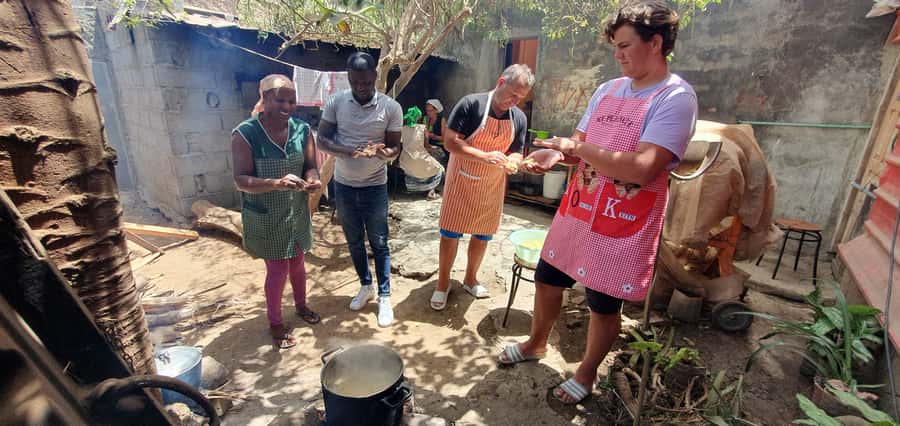
- Couscous taught by Eloisa and her family, from prep through cooking and tasting
- Assomada market time where you interact with Cape Verdean women and buy ingredients
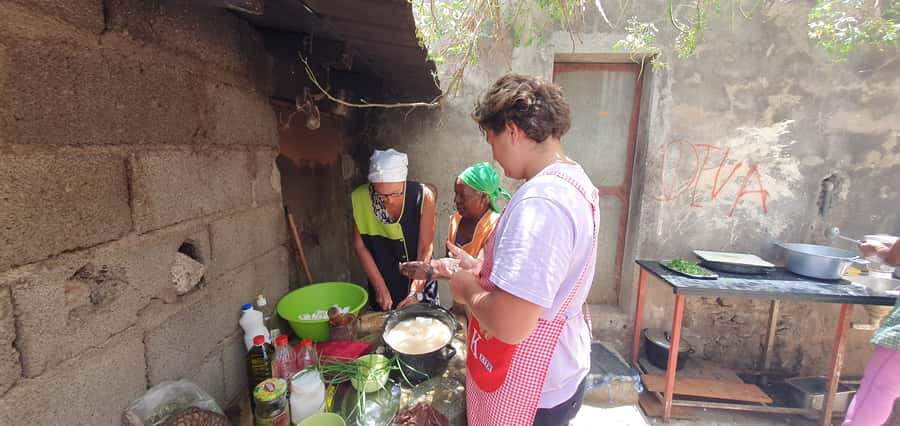
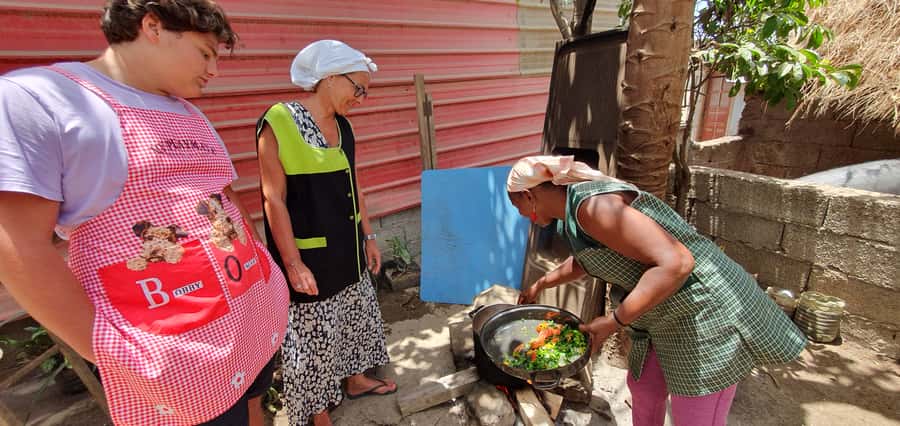
- Farm-house cooking on a three-stone stove, including traditional techniques
- Sugar cane pressing and tastings in stages, right there in the process
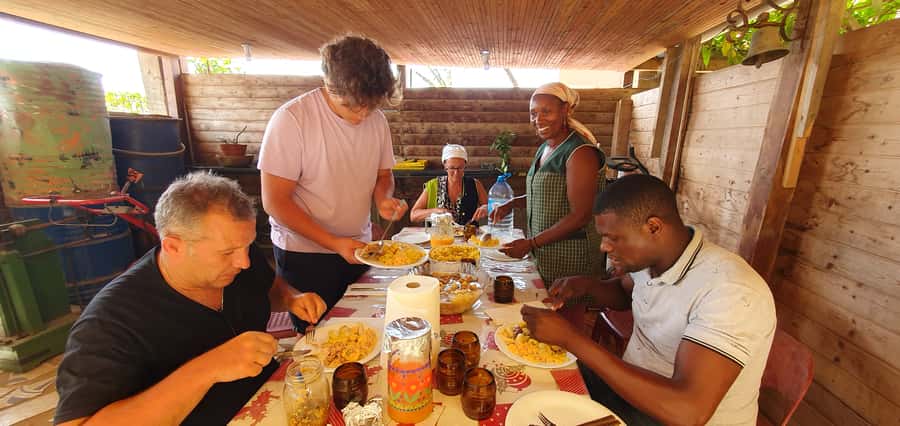
- Family lunch food tasting, served as part of the experience, not as an add-on
- A traditional dance session, with Eloisa and family joining in
Why a farm-house cooking day on Santiago Island is more than a food lesson
On Santiago Island, food tours can turn into a checklist. This one stays closer to how people actually live and eat. You get picked up from your hotel, then your day centers on cooking, ingredients, and shared time in a family setting.
What makes it worth your attention is the order of things. You do not just show up to eat. You go to Assomada, buy what you need, learn techniques, cook on the traditional three-stone stove, and then sit down for lunch as part of the same storyline. That continuity turns the day into a full sensory routine, from market chatter to the rhythm of cooking to the final tasting.
I also like that it is a private group. You are not competing for time with strangers, and it is easier to ask questions in real moments. The mood is friendly and upbeat, and the cooking work feels like something you are trusted to try.
The big thing to remember is that this is an active day. If you want a mostly hands-off sightseeing schedule, you might find it tiring. And if you have food allergies, you should skip it, since it is not suitable.
A few more Santiago trips to weigh against this one
- Praia: Santiago Island Tour with Tastings and Tarrafal Beach
★ 4.8 · 416 reviews - Santiago: Landscapes, Street Art, and Markets Day Trip
★ 4.8 · 316 reviews - From Port of Praia: Island Tour for Cruise Ship passengers
★ 4.5 · 190 reviews
Getting from your hotel to Assomada: settle into the local pace
The tour is built as one continuous day. It starts with hotel pickup and it ends with drop-off back at your hotel. That matters because you spend less time figuring out transport and more time doing the things that are included: market, cooking, sugar cane, lunch, and dancing.
After pickup, you head to the Assomada market. This is the first moment where you shift from being a visitor to being part of the shopping and preparation side of the day. You are given the chance to interact with Cape Verdean women, and you can purchase the products needed to prepare a typical Cabo Verde plate.
You are also moving with a local rhythm, not a rushed sprint. The tour flows from Assomada to the village of Mato Baixo, and you end back at your hotel at the end of the day. If you like a plan with clear anchors, you will probably like this structure.
A small practical note: pickup happens at your hotel with a set meeting place, and you should wait about 10 minutes before the scheduled pickup time.
Assomada market: where you learn by shopping, not just watching
The market visit is not treated like a quick photo stop. You are there to interact and to buy the necessary products for a typical meal. That hands-on purchasing piece is what makes the market feel useful.
I like this part because it changes your relationship to the ingredients. Instead of being told what is in the final dish, you see it first in the market context and then carry that shopping forward into cooking. You also get a real sense of the roles of local sellers, including the interaction with Cape Verdean women.
In practical terms, think of this as ingredient shopping with guidance. You will likely follow along with what you are preparing, so you are not left guessing. If you enjoy asking questions, this is the stage where you can get answers while you shop, not after the fact.
Potential consideration: markets can be busy places. Even if your group is private, you may be surrounded by normal market movement. If you prefer calm settings, it helps to have a relaxed mindset and accept that this is part of the experience.
Mato Baixo farm-house life: couscous lessons and traditional dishes
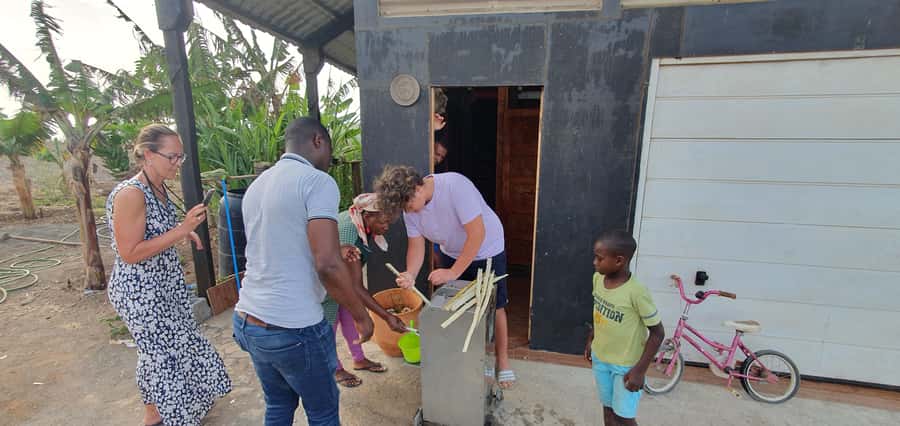
After Assomada, you head to the village of Mato Baixo, where the day shifts into farm-house time. This is where the experience becomes more than shopping and tasting. You meet Eloisa and her family, and you learn cooking techniques that keep Cape Verdean meals grounded in everyday tradition.
The standout cooking focus is couscous, described as the famous dish from the island. Eloisa teaches the process with her family, and an older woman from the region adds additional secrets for traditional dishes. That combination matters. You are not learning a single recipe in isolation. You are picking up techniques and small decisions that are tied to how local cooking works.
Cooking happens on a three-stone stove, which is a big deal for the authenticity of how you learn. You are not in a modern kitchen where everything is controlled. You are learning on the heat source and stove style locals use for everyday cooking. Even if you do not consider yourself a cook, you can learn a lot just by watching how the process is managed.
One of the best parts is that you are not only observing. The experience says you will prepare traditional plates. So you get real involvement, and that is what makes the meal feel earned.
Same island, a different sort of day out:
- Santiago Island Tour: Meet with a Local Family & Tarrafal Beach
★ 5.0 · 127 reviews - Island tour with German-speaking guide for cruise guests
★ 4.1 · 91 reviews - Praia & Cidade Velha: Guided City Tour
★ 4.8 · 80 reviews - From Praia: Banana Plantation Tour and Cuscuz Workshop
★ 4.8 · 75 reviews
The three-stone stove: what you learn beyond the recipe
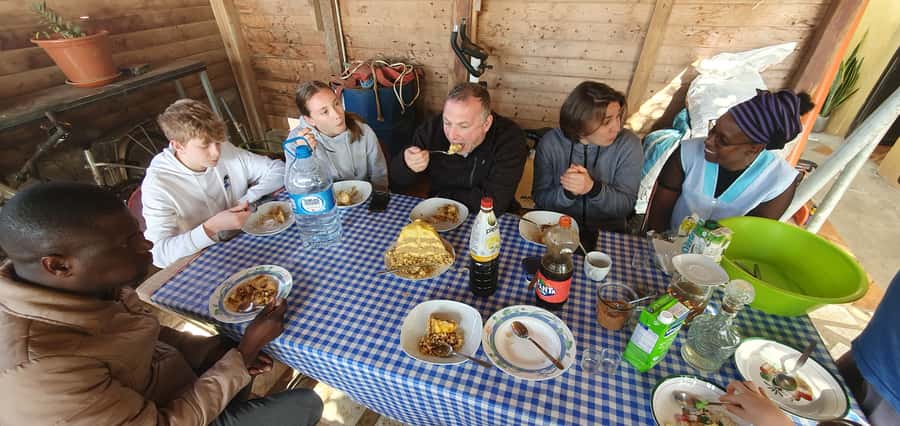
A three-stone stove is more than a cooking prop. It is a way of working with heat and attention. I like that this tour does not skip that layer. You learn techniques on the stove type locals use, so your understanding stays practical.
What makes it especially valuable for you is that it reframes cooking as process, not just ingredients. You start thinking about timing, heat management, and the sequence of steps. When you later taste the lunch, you can connect what you did to what you are eating.
Also, cooking on this stove likely changes your sensory experience. You will smell the cooking, you will feel the work, and you will see how people guide the process at the source of the heat. That creates a more grounded memory than a cooking class that is mostly about chopping and then waiting.
If you are sensitive to strong food smells or heat, it is worth considering that cooking is active during the day. On the other hand, if you enjoy being near the action, this is one of the main reasons the tour gets such strong ratings.
Sugar cane in stages: a hands-on drink experience
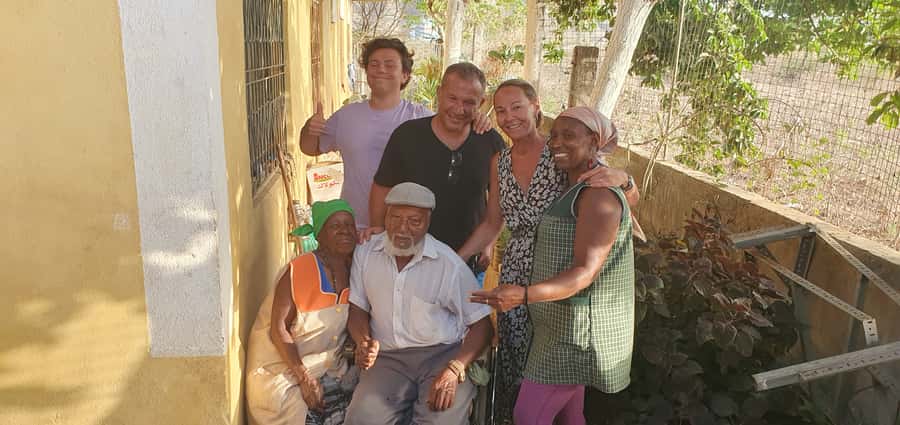
Sugar cane is built into the day in a very direct way. You will crush sugar cane to get the juice, then taste the sugar cane juices in all its stages. That phrase matters, because it signals you are not just doing one quick sip and moving on.
I like this because it is a full process moment. You see how sugar cane turns into juice, and you taste how it changes through the stages. It is a simple activity that adds variety to the cooking focus without feeling like a random side stop.
It also gives you something to do between cooking steps. You are constantly switching modes: shopping, cooking, preparing lunch, then pressing and tasting cane. That keeps the day from feeling repetitive, even though it is one long 8-hour block.
Practical note: it is a drink activity, so if you prefer to avoid sweet drinks, be aware that this is part of the program.
Family lunch food tasting: sit down and make sense of it
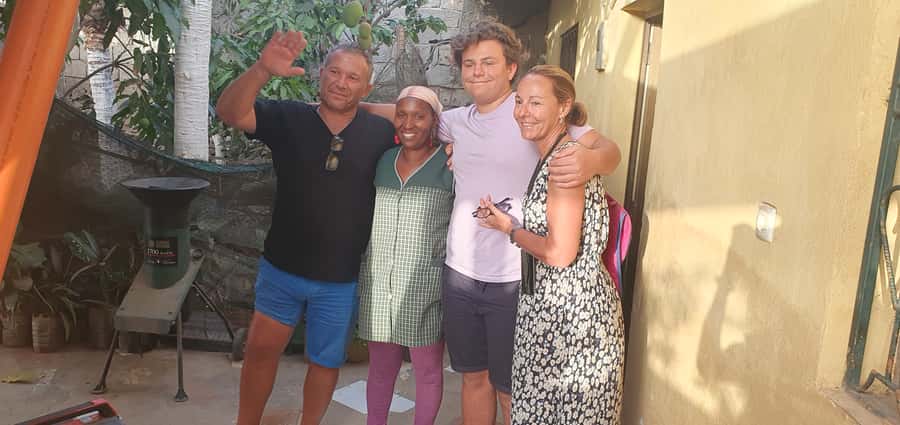
Lunch is included as a family lunch with food tasting. This is the payoff moment. After the market and the cooking work, you sit down with the results.
The family meal is not just a plate placed in front of you. The tour format ties lunch to what you prepared, including couscous and traditional dishes guided by Eloisa and her family. That makes tasting feel like closure to the day, not a separate event.
From a value perspective, the meal inclusion is a big plus for $106 per person. You are paying for a full day guide, transportation from hotel to key areas on Santiago Island, market time, cooking instruction, lunch, sugar cane pressing, and a dance session. Even if you never become a home-cooking expert, you still get a full set of activities and a shared lunch that you would normally spend extra money on.
Dancing after lunch: learning joy, not just steps
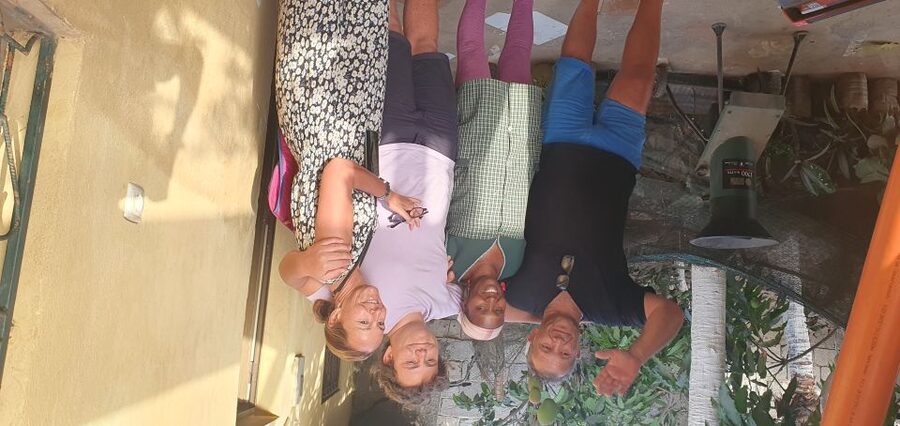
The tour includes a dance session. That part is easy to overlook when you book a food-and-market experience, but it is often the most memorable because it shifts the energy from teaching to celebration.
You dance in a family context, with Eloisa and her family joining in. In at least one case, the dancing was described as including Eloisa and her kids, which fits the overall theme of a day lived with locals rather than watched from the sidelines.
I like that it is included after lunch, because you are not asked to be performance ready at the beginning. You spend the morning learning and cooking, then later you get to join in with something lighter.
This part is also why the tour feels friendly. People treat it as a shared time, not a staged show for visitors.
Languages, timing, and group style that keep it comfortable
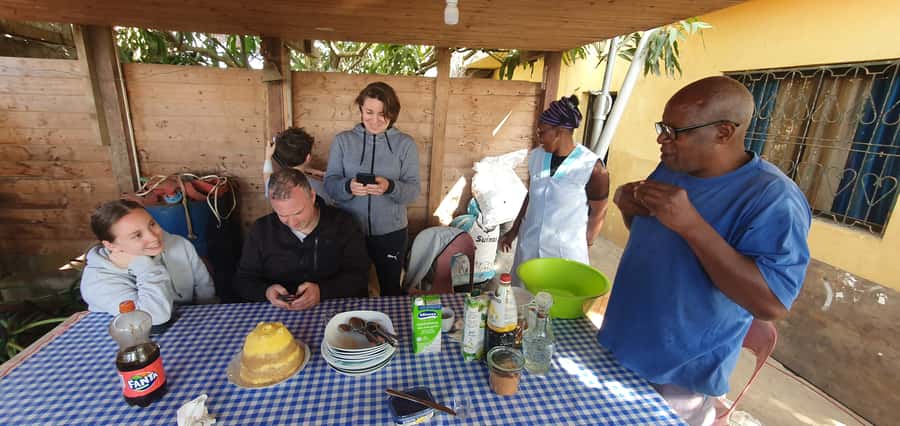
The tour includes a live guide speaking French, English, or Portuguese. That matters because food instruction needs clear communication. If your language is one of these, you will likely be able to ask questions and follow the steps better.
It is also listed as a private group. Private does not mean it is silent and formal. It usually means you get more direct interaction and fewer awkward gaps while you wait your turn.
The duration is 8 hours. That is a full day, so plan around it. If you like structured days, it will feel manageable because it has a sequence: pickup, Assomada market, Mato Baixo, cooking and lunch, sugar cane, dance, then drop-off.
The tour is designed around hotel pickup and drop-off. That reduces stress and helps you stay within the day rhythm.
Price and value: what $106 per person really buys you
At $106 per person, the price might look modest or steep depending on your travel style. Here is why it tends to feel fair.
You are not just paying for instruction. You are paying for:
- transportation from your hotel, plus drop-off
- market time to buy ingredients
- cooking instruction focused on local dishes and couscous
- use of a traditional three-stone stove technique
- a family lunch with food tasting
- sugar cane pressing and multi-stage juice tastings
- a dance session
- a live guide in French, English, or Portuguese
If you break it down that way, it becomes clear you are buying a whole day’s worth of guided local activities plus the main meal. In places where guided experiences often charge extra for food or add-ons, this bundles key moments together.
You should still treat it like a full-day activity. If you hate long days, the price will not save you from fatigue. But if you want to learn cooking techniques, eat what you help make, and participate in local life, the cost aligns with what you actually do.
Who should book this, and who should skip it
This tour fits best if you:
- want a hands-on day in Cape Verde food culture, especially couscous and traditional dishes
- enjoy markets as part of the learning process, not just a stop
- like being with a local family group setting, including dancing
- prefer a private group and clear guide communication in French, English, or Portuguese
It is not a good fit if:
- you have food allergies, since it is not suitable
- you want a light, mostly observational outing
If you are traveling with family, it also has a family-energy feel because the experience is hosted by Eloisa and her household. Still, you should judge based on your own comfort with cooking and active participation.
Tips to make your day smoother (without ruining the fun)
Because this is a working day, not a museum visit, your best strategy is to show up ready to participate. Be comfortable with learning by doing, not just watching.
A few practical ideas that match what the tour includes:
- Plan on food work and cooking time, since you will prepare traditional plates and use a three-stone stove.
- Expect market interaction and ingredient shopping at Assomada, so go in with a curious mindset.
- Bring your energy for the full sequence, including sugar cane pressing and the dance session.
If you take those cues, you will likely get the most out of the day and feel how the pieces connect.
Should you book this Santiago Island day with locals?
If you want a memorable Santiago Island day that stays rooted in real routines, I would book it. The strongest parts are the couscous cooking with Eloisa and family, the Assomada market ingredient flow, and the way the day ends with lunch and dance. You are not just consuming culture, you are doing it.
Skip it only for one reason: food allergies. Otherwise, if you like hands-on learning, friendly family hosting, and a full 8-hour schedule with market, farm-house cooking on a traditional stove, sugar cane, and dancing, this is a smart pick.
FAQ
How long is the day with locals experience on Santiago Island?
It lasts 8 hours.
How much does it cost per person?
The price is listed at $106 per person.
Is this tour private or shared?
It is a private group.
Where do you go during the tour?
You start with hotel pickup, visit the Assomada market, move to the village of Mato Baixo, and are dropped back off at your hotel.
What do you cook during the experience?
You prepare a traditional meal, including learning how to make couscous and traditional dishes. Cooking techniques include cooking on a three-stone stove.
Is lunch included?
Yes. There is a family lunch with food tasting.
Do you taste sugar cane on the tour?
Yes. You crush sugar cane to get the juice and taste sugar cane juices in all its stages.
Is there a dance session?
Yes, the experience includes a dance session.
What is the cancellation policy, and is it suitable for food allergies?
There is free cancellation up to 24 hours in advance for a full refund. It is not suitable for people with food allergies.
Just added around Santiago
- Praia city to the airport.★ 5.0 · 3 reviews
- Tarrafal to the Airport.★ 5.0 · 3 reviews
- Visit Santiago: Full-Day with Private Taxi Driver★ 1.0 · 3 reviews
- Hiking Águas Belas Cave★ 4.5 · 3 reviews
- Cape Verde: Best Hikking Trails of Santiago Island – 6 Days★ 5.0 · 3 reviews
- Best of Santiago Island: Cidade Velha, Workshop & Tarrafal Beach Tour★ 4.5 · 3 reviews
- Santiago Island: Private Airport Transfer to Praia or Vice Versa★ 5.0 · 3 reviews
- Tarrafal Bay Boat Trip and Beach Day★ 4.4 · 3 reviews
Santiago Tours, compared.

Santiago Island Tour with Tastings and Tarrafal Beach
Read our review →

From Port of Praia: Island Tour for Cruise Ship passengers
Read our review →
Santiago Island Tour: Meet with a Local Family & Tarrafal Beach
Read our review →
Island tour with German-speaking guide for cruise guests
Read our review →
Browse the lists this tour appears in