
Reviewed · HIKING & TREKKING
Ribeira Grande: Hiking Day Trip to Ribeira de Torre
This hike day trip feels special because it moves at a human pace through real Santo Antão countryside. You start high in the hills, walk between terraces and small houses, and end up at a waterfall area where you can cool off in a natural pool with locals nearby.
What I love most is the mix of countryside views and small village moments, like the viewpoints above Chu Chu (Xoxo). I also like that the tour doesn’t just show scenery, it includes a stop at a Grogue rum distillery, so you get a practical sense of local crops and what people actually do with them.
One consideration: this is not for people who are afraid of heights. The walking includes slopes and viewpoints where you’ll want steady footing and a calm head.
Key Things To Know Before You Go
- 4-hour nature hike inside a 6-hour day, so you’ll feel the walking but still have time for the waterfall and rum stop
- Pickup included from Ribeira Grande, with a drive to Faja da Cima at about 1,480 meters
- Village-to-valley route with Chu Chu (Xoxo) viewpoints plus farms of sugar cane, fruit, banana, and coffee
- Waterfall and natural pool option, with a refreshing swim stop near the end of the main hike area
- Grogue rum distillery visit at the end of the route, tied to how the island’s agriculture becomes spirits
- Small groups or private options available, with an English, French, Portuguese, or Spanish-speaking guide
From Ribeira Grande Up Into the High Country
Your day starts in Ribeira Grande with hotel pickup and a shared group drive toward the trailhead at Faja da Cima (around 1,480 meters). That altitude matters because it changes the feel of the hike. You go from “getting there” to “you are in it” quickly, with wide views and a cooler, hillier start than you might expect.
The drive also sets you up for what this trip is really about: Santo Antão is all vertical movement. Even when you are walking slowly, the terrain forces you to notice how people farm and live in steep places. The tour is built around that reality, not around a flat trail designed for quick photos.
The guide is part of the value here. One thing that stands out from real experience on this route is the quality of the local conversation. In particular, João is mentioned as an excellent guide, and you can tell he knows how to connect the scenery to daily life. I’d treat this like a Q and A hike, ask about the plants you see and what locals grow and use.
More Hikes in Santo Antão
- Santo Antão: Hiking Cova Volcano Crater to Ribeira Paúl
★ 4.5 · 31 reviews - Santo Antão: Ponta do Sol & Fontainhas Guided Trip with Hike
★ 4.8 · 9 reviews - Santo Antão: Trekking Cova de Paúl Volcano Crater – Ribeira de Paúl
★ 5.0 · 8 reviews
The Hike Segment: Rabo Curto to Lombo de Pedra
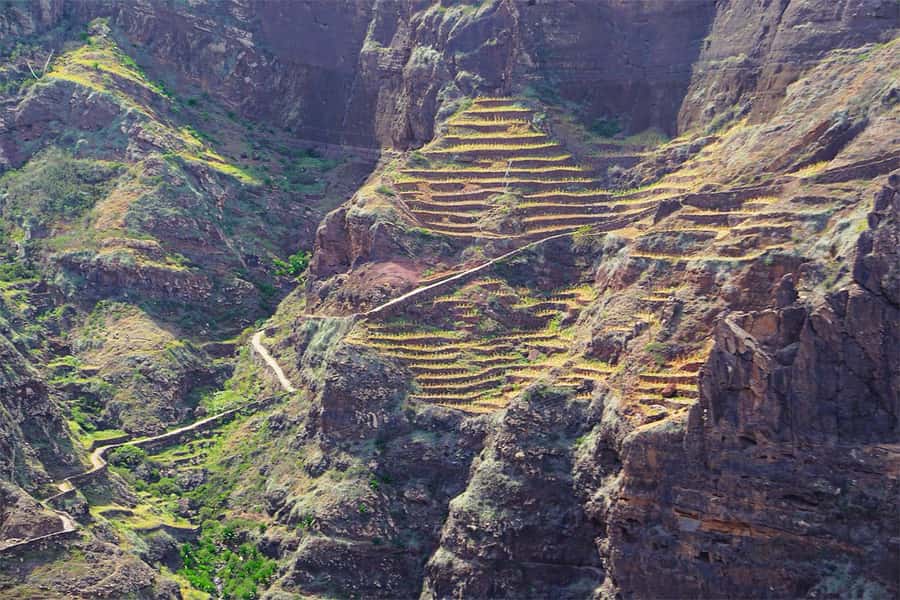
Once you’re at the trailhead, the hiking portion begins the way good island hikes do: not with dramatic tourism tricks, but with a steady ascent. You start up the slopes to Rabo Curto, walking through natural flora and climbing toward the areas where the farming terraces begin to appear.
This is one of the moments you’ll feel most clearly on your body. The walking time is about 4 hours for the nature hike, and the route is not designed to be a casual stroll. You’ll want proper hiking shoes, not just sneakers, because the steps and uneven ground can add up.
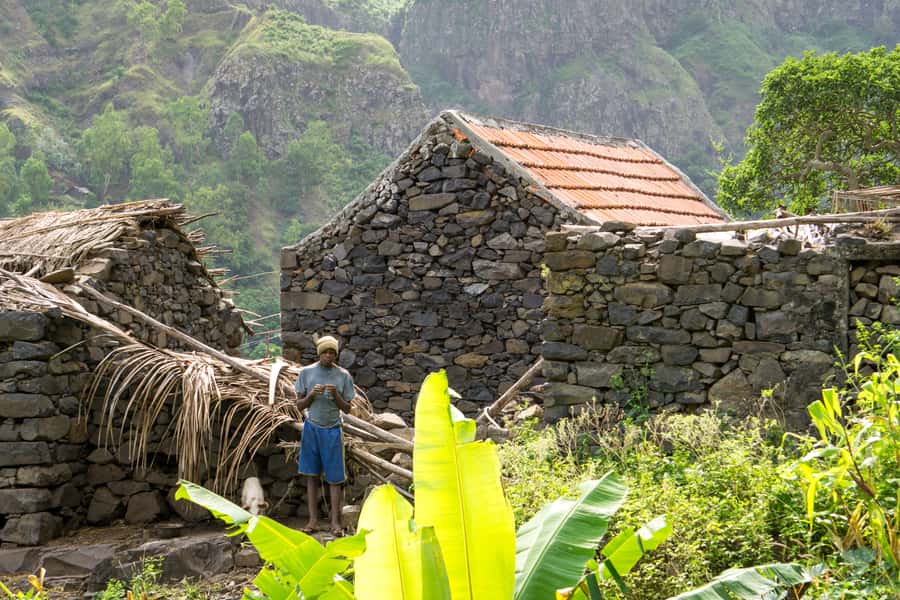
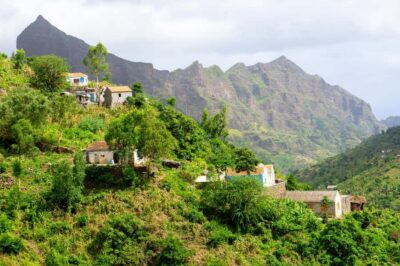
As you move along, you’ll see cultivated terraces and small houses, including a village stop area at Lombo de Pedra. For me, that’s the heart of the “authentic” part of the day. The terraces are not just pretty. They show how people manage water, soil, and steep slopes. When you understand that, the photos start to feel more meaningful, because you’re photographing a working system, not a postcard.
If you’re the type who likes structure in the middle of a hike, pay attention to how the guide frames what you’re passing. It helps you notice details you’d otherwise miss, like crop patterns, how farms cling to the hillsides, and where the route keeps opening up to views.
Crossing Hills Into Ribeira de Torre
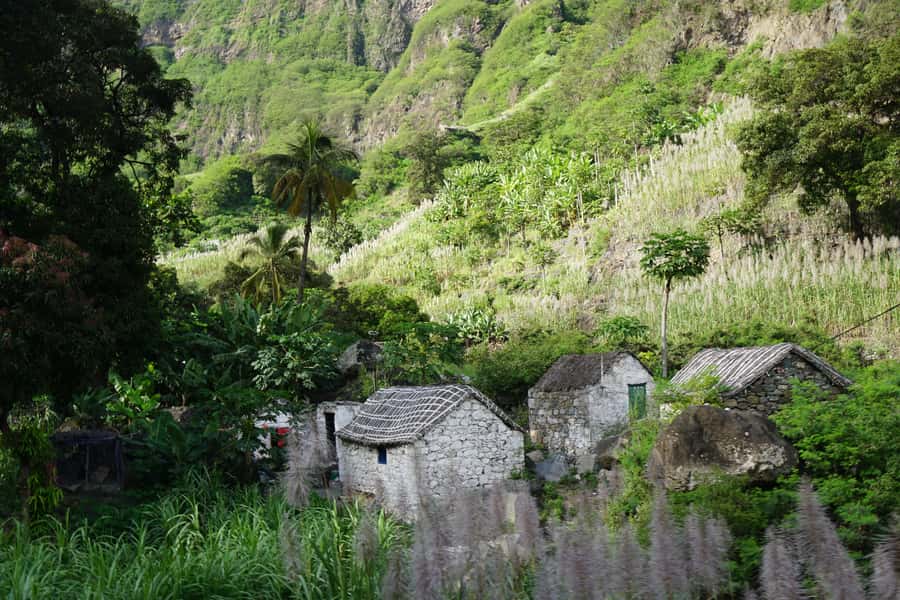
After Lombo de Pedra, the trail continues across hills toward the Ribeira de Torre valley. This is the stretch where the route starts to feel like it’s opening up. You’ll cross terrain that alternates between exposed viewpoints and more sheltered farm areas, and you’ll see sugar cane and fruit trees as part of the farming mosaic.
This is a good section to slow down and look where you step, not just ahead. The route is scenic, but it’s still a hike. If you are traveling with a companion who gets nervous around drop-offs, this is when you may need to go more slowly and keep everyone focused on safe footing.
One practical tip: bring your water and start sipping early. The tour includes water in what you should bring, not in what they provide. It’s not included, so you’ll want to carry enough for both the climb and the valley portion.
Chu Chu (Xoxo) Viewpoints and the Waterfall Area
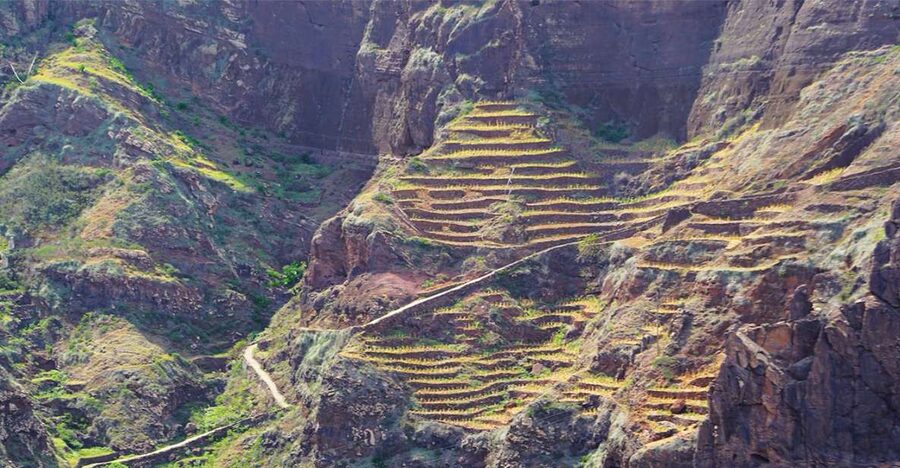
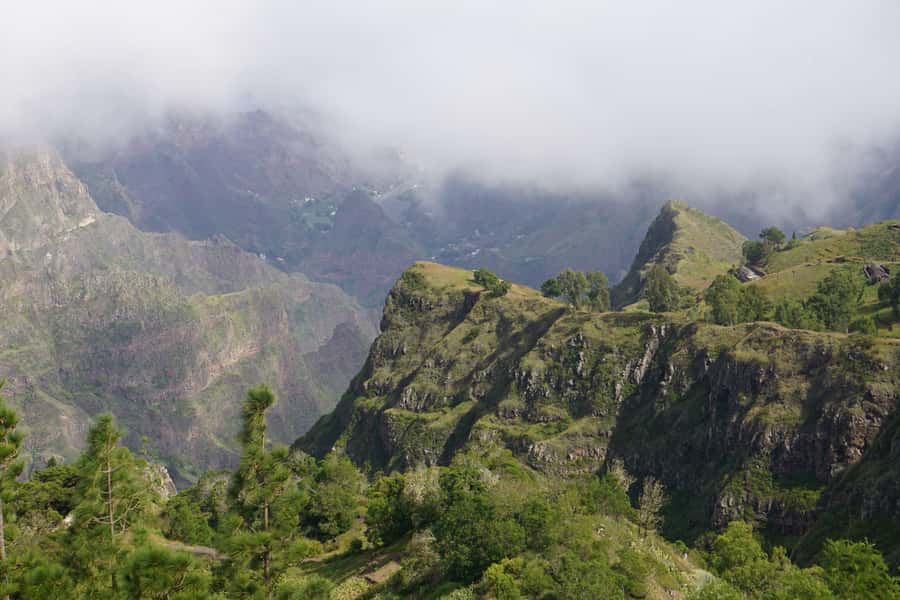
Then comes Chu Chu (also known as Xoxo), a village area where you get sweeping views over the valley of Ribeira Grande. This is the kind of viewpoint stop that changes your whole perspective. From up here, you can see how the valley shapes settlement and farming, and you can often grasp the scale of what you just walked through.
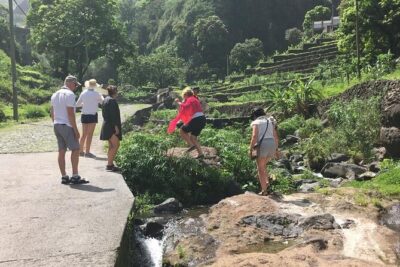
You’ll also pass close to a waterfall, which is one of the tour highlights. This matters more than you might think. On Santo Antão, waterfalls are not just background. They’re tied to the island’s water system and the reason life is possible on these slopes.
And yes, there’s an option to cool off. You can take a refreshing dip in a natural swimming pool near the waterfall. This is where the day becomes playful, and where you’ll often see locals interacting in a way that feels very real rather than staged.
For swim conditions, use your common sense. If it looks slippery, treat it like a natural area with uneven footing. I’d also dry off afterward if you can, because walking again afterward with wet clothes can make you cold, especially if the breeze comes through the valley.
Other Santo Antão walks with real climb in them:
- Santo Antão: Hike Ponta do Sol – Fontainhas – Cruzinha
★ 5.0 · 6 reviews - Paúl hike, the green garden
★ 4.5 · 4 reviews - Hike from the Cova Volcano Crater to Ribeira Paúl
★ 5.0 · 3 reviews - Fogo Island: Pico do Fogo Volcano Summit Hike
★ 4.6 · 92 reviews
The Farm Details: Banana and Coffee on the Way Down
The descent back through the area includes another crop highlight: you’ll be able to view banana and coffee plantations as you go down. This is a small detail on paper, but it’s a big deal on a hike because it tells you you’re moving through different farming zones.
On a short tour, you might only learn one thing about agriculture. Here, you get several, and they show how varied the valley can be depending on elevation and water access.
If you want to make this feel more personal, ask your guide how crops relate to each other and why certain plants appear in certain spots. In the experience of people who’ve done this route, the guide tends to answer questions readily, and that turns the hike from passive sightseeing into active learning.
Grogue Rum Distillery: How the Day Ties Together
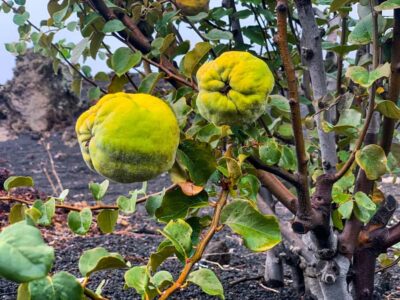
At the end of the route, the tour visits a local rum distillery called Grogue. This stop is valuable because it connects what you saw outside with what happens after harvest. You walk past sugar cane and fruit trees, then you learn about rum production.
There’s also a timing note that’s useful for planning your trip: rum production runs January 1 to May 31. If you’re traveling during those months, there’s a better chance that production activity is taking place as part of what you see and learn. Outside that window, you might still get the distillery experience, but your focus may be more on the story and process than on active production.
The Grogue stop works as a natural ending to the hike. You’re already thinking in terms of water, crops, and slope management, and rum becomes the practical outcome of that whole system. It’s a nice way to end a physically active day with something that feels grounded in local life.
Guides, Pace, and Group Size That Actually Works
This tour runs for 6 hours, with about 4 hours of hiking. That ratio is smart. If it were all walking, the waterfall and rum stop would feel rushed. If it were too short, you would miss the terraces and village-to-valley feel.
You can also choose private or small groups. In practice, small groups are helpful on uneven trails because you can move at a comfortable pace and ask questions without feeling like you’re holding up a big line of people.
Your guide speaks English, French, Portuguese, or Spanish, so you won’t be forced into a language you don’t know. One small but real advantage is that being in your language makes it easier to ask follow-up questions about flora, fauna, and how locals interpret what you’re seeing. That’s how you get more than a photo. You get context you can carry with you after the day ends.
Price and Value: Is $100 Worth It?
The price is $100 per person for a 6-hour experience, including pickup and drop-off in Ribeira Grande, a guide, the 4-hour hike, and liability insurance. Food and drinks are not included.
So is it worth it? I think it is if you want a guided, structured route that combines four things you can’t easily string together on your own in one day: a high-elevation trail start, village viewpoints, a waterfall with a natural pool option, and a Grogue rum distillery visit.
It’s also good value if you’re not traveling with a car. The route relies on getting to Faja da Cima (around 1,480 meters) efficiently, then returning you to your accommodation afterward. That time savings is part of what you are paying for.
Where you might feel the cost more is if you only want one piece of the day, like just the waterfall or just the distillery. But if you like the full arc, from rural villages through terraces to agriculture and rum, then the price feels aligned with what you actually get.
What to Pack and How to Stay Comfortable
Because this is a hiking day in Santo Antão’s steep terrain, the basics matter. Bring:
- Hat
- Hiking shoes
- Sunscreen
- Water
- Comfortable clothes
I’d treat this as a “no shortcuts” kind of hike. Shoes and water are the two big make-or-break items. Even if you feel fit, the trail can slow you with uneven ground, and the valley areas can still bake in sunlight.
Also, if you plan to swim in the natural pool, think ahead. Wet gear and sun after can be uncomfortable, so plan to manage your temperature and try to keep your pace steady.
Safety Notes You Should Take Seriously
This tour is not recommended if you are afraid of heights. The route includes slopes and viewpoint areas, and you do not want a panic-based experience on a steep trail.
It also is not suitable for:
- Children under 12
- People with mobility impairments
- Wheelchair users
- People afraid of heights
If you are on the fence because you can do stairs but not heights, be honest with yourself. This is not just “some walking.” It’s a mountain-side route where your comfort level with vertical terrain matters.
Should You Book This Ribeira de Torre Day Trip?
I’d book this if you want a guided day that feels like walking inside real Santo Antão, with village viewpoints, terraces, and a waterfall swim option, then a finish at a local rum distillery. It’s the kind of tour that gives you photos, yes, but also gives you the “how and why” behind the scenery.
Skip it if you are uncomfortable on sloped trails or you know you get tense around drop-offs. Also consider skipping if you hate the idea of hiking for about 4 hours total, even though the overall day is 6 hours.
If you go, bring water, ask your guide questions, and don’t just rush to the next view. The best moments are the in-between ones: the terraces, the crop variety, and those village stops where you can pause and actually look around.
FAQ
How long is the Ribeira Grande hike trip to Ribeira de Torre?
The tour lasts about 6 hours total, including a 4-hour nature hike.
What does the $100 per person price include?
It includes hotel pickup and drop-off in Ribeira Grande, an English, French, Portuguese, or Spanish-speaking guide, the 4-hour nature hike, and liability insurance.
Is food and drink included?
No. Food and drinks are not included, so you will want to bring or plan for them separately.
Where does the hike start?
You are driven to the trailhead at Faja da Cima, at an altitude of about 1,480 meters.
Will we see a waterfall and have time to swim?
Yes. You pass close to a waterfall and have the option to take a refreshing swim in a natural pool.
What is the rum stop at the end of the route?
The tour includes a visit to a local rum distillery called Grogue.
What languages are available for the guide?
You can choose a guide speaking English, French, Portuguese, or Spanish.
Who should avoid this tour?
It is not recommended for people afraid of heights, and it is not suitable for children under 12, people with mobility impairments, and wheelchair users.
Just added around Santo Antão
- Hike from the Cova Volcano Crater to Ribeira Paúl★ 5.0 · 3 reviews
- Paúl hike, the green garden★ 4.5 · 4 reviews
- Santo Antão: Hike Ponta do Sol – Fontainhas – Cruzinha★ 5.0 · 6 reviews
- Santo Antão: Full-day Island Tour & Visit to Cova de Paúl Volcano Crater★ 5.0 · 7 reviews
- Santo Antão: Trekking Cova de Paúl Volcano Crater – Ribeira de Paúl★ 5.0 · 8 reviews
- Santo Antão: Ponta do Sol & Fontainhas Guided Trip with Hike★ 4.8 · 9 reviews
- São Filipe: Fogo Volcano with Wine and Cheese Tasting★ 4.0 · 9 reviews
- Full-Day Island Tour in Santo Antão with Lunch Included★ 4.5 · 14 reviews
Hiking & Trekking, compared.
Serra Malagueta: Principal Valley Hike & Lunch with Locals
Read our review →
Baobab Mysterious Tree, Green Valley & Old City Hike
Read our review →
Monte Tchota Natural Park to Pico d’Antónia Hike
Read our review →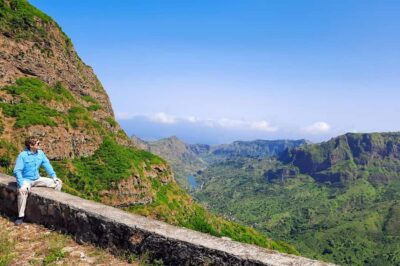
Browse the lists this tour appears in