
Reviewed · WALKING TOURS
Walking tour with traditional music in Mindelo
Mindelo is music first, sightseeing second. This walking tour is built around that idea, with traditional rhythms performed as you move through the city’s key spots and local hangouts. I love how it connects Mindelo culture to real streets, not canned facts. I also love that you hear the six traditional rhythms in context, with guidance from an experienced local.
My second favorite part is the way the route mixes landmarks with everyday life, from a former governor’s palace setting to shops and craft spaces you would likely skip on your own. You also get built-in chances to snack and taste local flavors during the longer option, and one review even mentioned a vegan snack showing up unexpectedly.
One consideration: you will walk, including hills, and the tour is not suitable for disabled travelers. If you need step-free routes or lots of breaks, this might not be the right fit for your day.
Key points before you book
- Traditional music is the main event, not background noise
- Six rhythms of Cabo Verde get explained in plain, usable terms
- A small group max (20 people) keeps it friendly
- Local stops beyond the tourist postcard help you feel the city’s pace
- You support social projects linked to SOS Children’s Village in Mindelo
- Walk-ready shoes matter, because the route includes hills
Why Mindelo Traditional Music Works as a Walking Tour
This tour feels like a smart way to learn Mindelo fast. The city can be surprisingly easy to miss if you only chase views. Here, you walk with a guide who uses music as the thread, so you understand what you are seeing while you are still moving through it.
I like that the experience centers on hearing and recognizing Cape Verde’s musical styles, including the famous set of six rhythms. That matters because music is how a lot of the island story is told. When someone explains the rhythm patterns and then performs or plays them, the “what” turns into “why.” You end up with something you can actually carry home, even if you are not a musician.
Another strong point is the balance between big civic landmarks and smaller everyday stops. You get to see formal places like Palácio do Povo, but you also walk into markets, craft areas, and local spaces where people actually buy things, talk, and make community life happen.
There is also a heart behind the tour. Mindelo Cultural says your participation supports social projects connected to SOS Children’s Village in Mindelo. That does not replace good guiding, but it adds meaning when you are spending your time and money here.
A few more Mindelo trips to weigh against this one
- Mindelo by Night walking tour
★ 5.0 · 18 reviews - Mindelo: Private Walking Tour with Local Food Tasting
★ 4.8 · 4 reviews - City Walking Tour of Mindelo: Cultural Capital
★ 4.2 · 4 reviews
Price and What You Get for $80.26
At $80.26 per person for about 4 hours, you are paying for more than a stroll. You are buying:
- A guided walk through Mindelo highlights
- Traditional music performances tied to the cultural story
- Time inside markets, craft spaces, and local stops
- The longer tour’s added tasting element (since your duration lines up with the 4-hour option)
In practical value terms, the big question is whether you will use the guide’s context. If you enjoy learning why places look the way they do and how music connects to island life, this price starts to make sense quickly. If you only want photos, you can probably DIY a cheaper route. But for most people, the music explanation and the local places are the point.
Also, it books fairly in advance, about 22 days on average. That usually signals demand for a specific kind of experience, so if your dates are firm, plan ahead rather than hoping for luck.
Starting at Ouril Hotel Mindelo, Then Walking Into the City’s Story
The tour meets at Ouril Hotel Mindelo and ends back at the meeting point. That is convenient because you are not stuck coordinating a second ride across town. It also makes the timing feel clean, since you know you can head back when your 4-hour window is done.
From there, you move through Mindelo in a way that stays purposeful. The route is not trying to cover everything. It’s picking spots that represent different pieces of island life: formal power, daily shopping, crafts, and the working face of commerce and the marina area.
The pace is walk-based, and the reviews hint you should come ready for hills. You do not need athletic gear, but you should wear shoes you can trust for uneven sidewalks and sudden slopes.
And because the group max is 20 travelers, you typically get a guided feel instead of a herd situation. That size is big enough for energy, small enough for questions.
Palácio do Povo: From Power to People
One of the first big anchors on the walk is Palácio do Povo, described as the former seat of the governor. Even if you only pass by buildings like this elsewhere, it helps to pause for the story here.
Why this stop matters: historic seats of power tell you how a city organized itself. In a place where culture and community are central, you can usually trace tensions and changes through how buildings were used. A guide can connect that to today’s public life, so the palace is not just stone and photos. It becomes a point on the map of how Mindelo became what it is now.
If you like context, this is one of those stops where you might lean in. If you hate lectures, keep an eye on how your guide ties it back to what you will see next.
Same island, a different sort of day out:
- São Vicente: Snorkel with Sea Turtles Adventure
★ 4.5 · 111 reviews - Full Day Island Tour, São Vicente, Mindelo, Highlights
★ 4.8 · 109 reviews - São Vicente Island: Full-Day Tour
★ 4.7 · 97 reviews - Santo Antão Highlights: Day Trip by Car with Ferry from SV
★ 4.8 · 84 reviews
A Souvenir and Everyday Goods Stop, Where Local Shopping Feels Real
Next, you head to a stop where you can find souvenirs from mainland Africa, traditional clothing, second-hand items, and groceries. This is not just for shopping. It’s a window into how Mindelo mixes influences and everyday needs in the same spaces.
This is where you learn what people actually buy and how commerce moves. It also helps you understand how “traditional” can exist alongside modern routines. On an island, that overlap is the norm, not an exception.
Practical tip: if you want to pick up something small, this sort of stop can be better than buying late. You see quality, price range, and what other shops carry before you commit.
Also, if you have dietary goals, this kind of stop can be useful since the longer tour includes tasting elements. The information you get from your guide can help you navigate what is truly local.
The Torre de Belém Replica: A Clever City Copy That Teaches Something
At one point, the tour includes a walk to a replica of the famous Torre de Belém in Lisbon. A replica might sound like a detour. But used right, it becomes a lesson in how places remember connections across oceans.
Here’s what you should look for: replicas are never random. They represent identity, memory, and relationship. Your guide’s role is to make that meaning clear, so you stop seeing it as a tourist trick and start seeing it as an explanation in architecture form.
If you care about Portuguese influence and how it shows up in Cape Verde, this stop gives you a tangible example you can point to.
Künstlerhof and the Craft Studios You Can Actually Visit
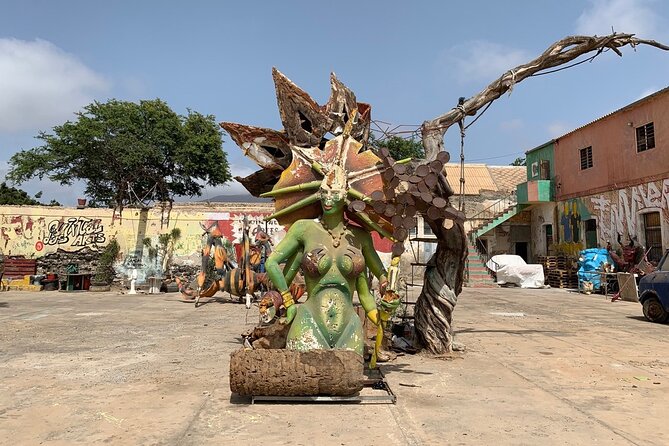
Then you move to Künstlerhof, a creatively designed area with artisans, studios, and shops. This is one of the best stops for people who want to buy a memory that feels made, not manufactured.
What makes this worthwhile is the setup: you are not just passing a gallery wall. You are in a place where people work and where craft is part of daily life. Even if you do not plan to buy much, you can learn how artisans present their work and what types of items have local demand.
If you like souvenirs with story, this is a stronger choice than a generic stall. You might also find the space less stressful than a typical market, since it feels oriented toward creators and their output.
The Market Stop: Color, Goods, and How a City Feeds Itself
The route also includes a stop at a market hustle inside a historic building. Markets are where a city reveals its rhythm. They show you what people are buying today and what they treat as normal.
This stop is especially useful in a music-based tour because it grounds everything. If you heard about cultural traditions, you now see the practical side: food, supplies, everyday items, and the movement of daily life.
You can also use the market stop to orient yourself for the rest of your stay. After you’ve walked a market like this with a guide, your unaided visits later feel easier. You know where the energy is and what to expect.
If you dislike crowds, choose this part as your time buffer. Bring a calm mindset. This is lively, but it is also a core Mindelo experience.
Largest Commercial and Marina Area: Seeing the City’s Working Edge
One of the last described highlights is the largest commercial and marina of the Cape Verde Islands. This is a strong capstone because it shows another side of Mindelo beyond culture halls and market rooms.
Commerce and seafront activity help explain why a port city develops quickly and how it connects to the wider world. Your guide can connect what you are seeing to why Mindelo attracts music, people, and ideas. Even if you keep your listening style simple, standing near a marina area can make the city’s energy feel physical.
Photo note: this is often where you might want to pause for wide shots, but also remember that it is a working area, so keep space for people doing their jobs.
Where the Music Fits: Traditional Rhythms as the City’s Common Language
Traditional music is the main reason most people book. The tour includes music performance of 6 traditional rhythms. That phrasing matters. You are not just hearing one song type. You are hearing a set of styles treated as part of one broader cultural system.
This matters because it helps you understand Cape Verdean music as more than a single sound. Once you recognize that there are different rhythms and that someone can explain their differences, the next time you hear local music at a bar you will notice more than before.
One of the strongest signals from the experience is how personal the music instruction can feel. In longer versions of this Mindelo Cultural program, a local musician may offer a more focused lesson about the rhythms. Even when it stays performance-focused, your guide’s guidance should help you connect the sound to the places you have just walked through.
If you are the type who likes to ask questions, this is a great tour to do it. Your guide is wearing a Mindelo Cultural badge and is positioned as the connection between the audience and the music scene.
Snacks and Tastes: More Than a Quick Bite
Since your tour duration matches the 4-hour option, you should expect the culinary element. The program is described as including culinary tastings with music performance. That can mean you stop somewhere small and local for tastes rather than a formal restaurant setting.
Reviews included details like fresh juices and small Cape Verde snacks. One account even mentioned a vegan snack appearing during a stop, while music was playing and someone explained sounds from the islands. That’s the kind of happy surprise you should hope for: food and music happening together, in a setting that feels like a local pause.
Practical approach: eat light before you go unless you know the portion will be substantial for your specific option. Even if you think you are a light eater, the walk plus tasting stops can add up.
Also, if you have dietary restrictions, this is the right kind of tour to ask about options. The tasting stops happen inside local places, so your guide should be able to advise in real time.
The Social Good Piece, Connected to SOS Children’s Village
Mindelo Cultural says your participation supports social projects tied to SOS Children’s Village in Mindelo. This is not just marketing wallpaper. On tours like this, it often shows up as a reason to hire and support local programs rather than funneling money away from the community.
I like including this in my decision because it adds moral value without adding extra effort on your end. You still get a full tour experience. The difference is you also get to feel like your payment contributes to something bigger than a single performance.
Logistics That Affect Your Comfort
A few practical points can help you enjoy the tour more:
- You do not need special skills, and most travelers can participate.
- It is near public transportation.
- The group is capped at 20 travelers, which helps keep it manageable.
- It is not suitable for disabled travelers, so plan around that if accessibility is a must for you.
Comfort tips based on the walking nature: wear grippy shoes and consider bringing water. If you get heat easily, plan your timing for a cooler part of the day.
And since it uses a mobile ticket, have your phone battery ready. In places like markets, signal can be unpredictable. Download or store the ticket where you can access it offline.
Who This Traditional Music Walk Is Best For
This is a great fit if:
- You want Mindelo culture through music and local context
- You enjoy walking with a guide and asking questions
- You like tours that include local markets and craft spaces
- You care about thoughtful spending, including support for social projects
It might be less ideal if:
- You have mobility limitations or need step-free access
- You prefer very short sightseeing bursts, no walking required
- You only want landmark photos and do not care about music explanation
For couples and solo travelers, the small group max makes it easy to connect. For families, it can work depending on kids’ walking stamina, but the accessibility note matters.
Should You Book Mindelo Cultural for Traditional Music in Mindelo?
My take: book it if music is your entry point to a destination. The tour is not just a route with stops. It is built around how Cape Verde rhythms connect to daily life, places, and people.
The best reasons to choose it are the combination of:
- Traditional music performance with the six rhythms
- Local stops you would probably not find on your own
- A guide who can connect history and society to what you see walking
- Tasting moments on the longer option
- The social good link to SOS Children’s Village
Before you book, be honest about your walking comfort and mobility needs. If hills feel like a deal-breaker, choose a different kind of tour on Sao Vicente.
If you are good with a 4-hour walking experience and you want your first real taste of Mindelo, this is one of the strongest ways to start your stay.
FAQ
How long is the walking tour with traditional music in Mindelo?
The tour lasts about 4 hours.
How much does it cost per person?
The price is $80.26 per person.
Where does the tour start and end?
The tour starts at Ouril Hotel Mindelo and ends back at the meeting point.
Is this tour a mobile-ticket experience?
Yes, you’ll receive a mobile ticket.
What is the maximum group size?
This activity has a maximum of 20 travelers.
Is the tour near public transportation?
Yes, it is near public transportation.
Is it suitable for disabled travelers?
No, it is not suitable for disabled travelers.
Just added around Mindelo
- São Vicente: Snorkel Experience with Sea Turtle★ 4.5 · 32 reviews
- Cape Verde – Santiago, Fogo, São Vicente & Santo Antão Islands 11 Days★ 5.0 · 3 reviews
- São Vicente Half Day★ 4.6 · 3 reviews
- São Pedro experience (hiking & snorkeling with turtles)★ 5.0 · 3 reviews
- Mindelo City Walking Tour★ 3.6 · 3 reviews
- Mindelo Cultural: city tour with live music and dance class★ 5.0 · 3 reviews
- Mindelo: Private Walking Tour with Local Food Tasting★ 4.8 · 4 reviews
- Private Snorkel Experience with Sea Turtle for Cruisers★ 4.6 · 4 reviews
Walking Tours, compared.





Browse the lists this tour appears in